The coffee process begins with the sowing of the seed in sand. This seed will germinate and become a small plant known as “chapola”. After a couple of months, the chapola is transferred to a bag where it will continue to grow until it becomes strong enough to be planted in the field.
The field
2
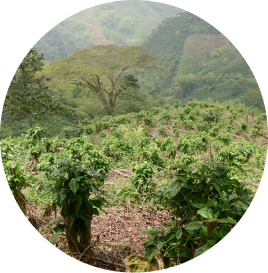
After 2 to 4 months in the bag, the coffee plant is ready to be moved to the field. Once planted, it can take up to 2 years to give its first harvest.
The coffee tree will be productive for 6 more years until it is cut or replaced by a new one.
Blooming
3
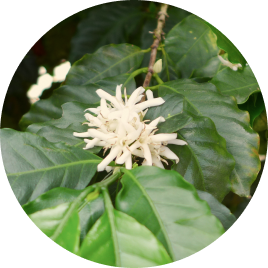
Before the coffee tree produces beans, it blooms. Flowering happens as a survival mechanism of the tree when facing intense drought.
This beautiful white flower only remains for a few days and after it falls, a bean sprouts. The beans continue their evolution process for around 9 months until they are fully developed.
Recolecta
4
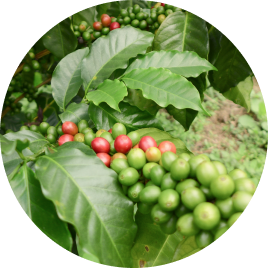
After approximately 9 months the coffee beans will have reached their full development. Then begins the most important stage of the entire coffee process: “La Recolecta”
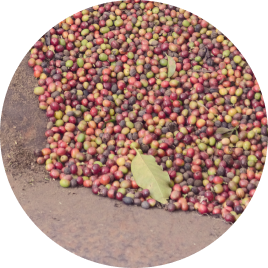
Recolecta is a word in Spanish that means gathering the fruits of a harvest. Coffee is hand-picked at a very precise moment of ripening. The final product completely relies on the expertise of collectors.
Process
5
After the coffee is hand-picked, it must be processed on the farm.
Although there are currently several processes with small and large differences between one and the other, the main ones are washed, honey and natural.
Washed: the coffee is mechanically puled, removing the “cherry”. Then it is fermented in a tank between 18 – 24 hrs. (this helps to separate the mucilage from the bean). Finally, the beans are washed and ready to proceed to the drying stage. The result is usually a coffee of great clarity, light body and prominent acidity.
Honey/semi-washed: the coffee is mechanically pulped, removing the cherry. Then, the coffee goes directly to the drying stage. Fermentation is more aggressive when it happens in the drying stage, and this is reflected in the cup through ripe fruit flavors.
Natural: the coffee is dried with its “cherry”, without pulping or washing. Fermentation is even stronger than in Honey processes. The outcome is a sweet and very complex cup.
Drying
6
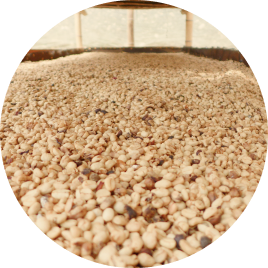
After the coffee has been processed, the drying stage begins.
There are two main drying methods, in the sun or in mechanical “silos”.
Sun drying method: most of the small coffee growers dry their coffees in the sun, allowing the bean to shrink by 50% in a slow and controlled way. The drying process takes between 6 and 15 days, depending on the type of coffee and it’s processing. The final moisture level should reach between 12% and 11%. In countries like Colombia, drying is done in raised beds.
Mechanical “silos” drying method: this method is more common in medium and large coffee growers. There are several styles, but the fundamentals stay the same: the hot air enters the silo and removes the moisture from the grains. Silos range from 45C to 60C and can dry coffee in 36 hrs.
Green beans
7
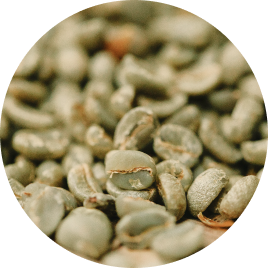
Once dried and after resting in parchment, the coffee is moved to a dry mill. The dry mill removes the parchment and various degrees of silver skin to reveal the green bean inside.
Then, the coffee beans are sorted by size, density and color. Only the beans that meet the highest standards in these categories can continue the process for export or roasting.
Roasting
8
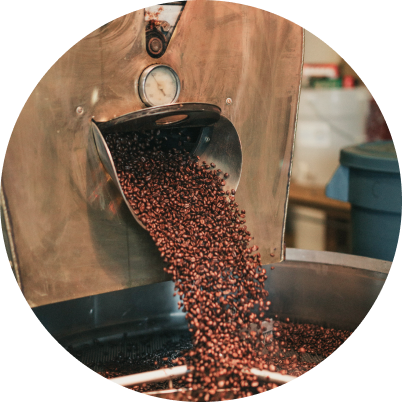
Roasting consists of transforming coffee beans from green to brown, going through the phases of drying stage, browning stage and development stage.
Broadly speaking, light roasted coffees have higher acidity and fruit flavors, and dark roasted coffees lean towards bitterness and burnt flavors.
Artisanal specialty coffee roasters roast in small batches and always under the control of a master roaster. Each coffee is deeply analyzed, and a roasting curve is defined according to its density, profile and destination. The goal is to develop the potential of each coffee.
These are usually medium or light roasts so that the unique notes that differentiate each origin are never lost.
See also
You cannot add "Christmas Box" to the cart because the product is out of stock.